Sterility Test
Ensures every batch is free from bacteria and contaminants, meeting USP 797 standards.
PASSED

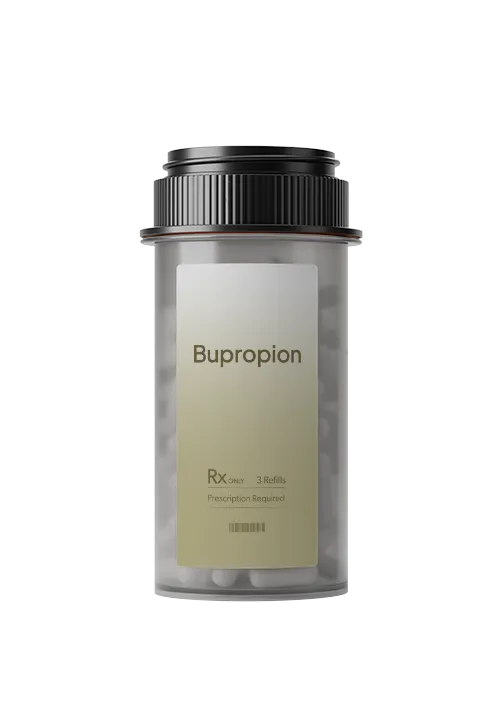
Bupropion is a prescription medication commonly used to treat depression and seasonal affective disorder. It may also be prescribed to support smoking cessation when recommended by a licensed healthcare provider.
If our licensed clinicians determine medication isn’t right for you after review, you don’t pay for medication. This covers clinical eligibility — individual results from any treatment vary and cannot be guaranteed.
U.S.-licensed clinicians, licensed compounding pharmacy partners, and ongoing support — all coordinated in one place. Prescriptions are issued only when clinically appropriate after individual evaluation.
Bupropion is a prescription medication that may help reduce nicotine cravings and withdrawal symptoms. It is commonly used as part of a medically supervised smoking cessation plan. Start with a simple online consultation to see if this option is appropriate for you.


Includes online consultation, prescription (if appropriate), and home delivery. Transparent monthly pricing with no hidden fees.
Prescription required. A licensed healthcare provider will determine if Bupropion is appropriate for you. This medication is FDA-approved for smoking cessation, but may not be suitable for everyone. Individual results may vary.






Your care should go beyond a prescription.
Every Idun Rx plan starts with a clinical review and continues with support from board-certified doctors and wellness coaches.
So you’re not left guessing — you’re guided every step of the way.
Confirms each batch meets strict concentration standards within ±10% of labeled strength.
Ensures every batch is free from bacteria and contaminants, meeting USP 797 standards.
Verifies products are free from harmful bacterial toxins and meet USP 85 safety limits.
Balances acidity levels to support comfort and minimize irritation.

Bupropion, which is an atypical antidepressant, also helps those looking to stop smoking. Although the exact mechanism of how Bupropion helps people quit smoking is not fully understood, it is believed to work through the following actions:
Dopamine and Norepinephrine Reuptake Inhibition: Bupropion inhibits the reuptake of two important neurotransmitters in the brain: dopamine and norepinephrine. By blocking their reabsorption, Bupropion increases the levels of these neurotransmitters in the brain, leading to improved mood and increased alertness, which may help reduce the urge to smoke.
Nicotine Receptor Modulation: Nicotine, the addictive component in cigarettes, binds to specific receptors in the brain known as nicotinic acetylcholine receptors. Bupropion is thought to partially stimulate these receptors in a way that is different from nicotine, which may help reduce nicotine cravings and withdrawal symptoms.
Reduced Withdrawal Symptoms: Bupropion may alleviate some of the withdrawal symptoms associated with quitting smoking, such as irritability, restlessness, and difficulty concentrating. This can make it easier for individuals to cope with the challenges of quitting.
You begin taking Bupropion daily, 1 week before you quit smoking. This builds up the level of medicine in your body. You take Bupropion for up to 12 weeks after you stop using tobacco but you can take Bupropion for as long as 6 months to 1 year. Your medical provider will make the determination on how long your treatment should last.
Bupropion comes as a tablet to take by mouth. It is usually taken once a day for a few days then twice a day with or without food. Bupropion is an extended-release tablet and therefore must be swallowed whole and cannot be cut or crushed. It is very important that you have at least 8 hours between doses, and that you do not exceed two doses in a 24-hour period. Follow the directions on your prescription label carefully. Take Bupropion exactly as directed. Do not take more or less of it or take it more often than prescribed by your doctor.
Bupropion is a medication primarily used for smoking cessation and the treatment of depression. It is important to note that all medications, including Bupropion, may have potential side effects. Common side effects of Bupropion may include:
While these are the most commonly reported side effects, it’s essential to be aware that there could be more severe or less common side effects that require immediate medical attention. For example, some people may experience mood changes, agitation, anxiety, or even suicidal thoughts. If you experience any unusual or severe reactions while taking Bupropion, it is crucial to contact your healthcare provider.
If you forget to take your daily dose of Bupropion, skip the missed dose and continue your regular dosing schedule. Do not take a double dose to make up for a missed one.
Keep this medication in the original container that you received it in, tightly closed, and out of reach of children. Store it at room temperature and away from excess heat and moisture (not in the bathroom).