Sterility Test
Ensures every batch is free from bacteria and contaminants, meeting USP 797 standards.
PASSED

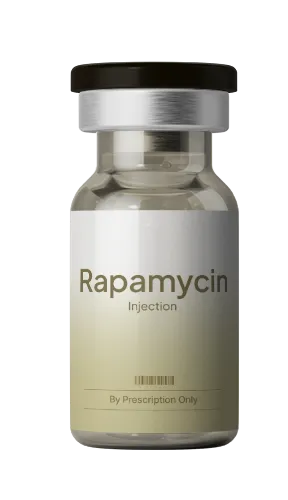
Rapamycin is a prescription medication sometimes used in low-dose wellness protocols under medical supervision. It should be prescribed and monitored by a licensed healthcare provider, and its use may vary based on individual health needs.
If our licensed clinicians determine medication isn’t right for you after review, you don’t pay for medication. This covers clinical eligibility — individual results from any treatment vary and cannot be guaranteed.
U.S.-licensed clinicians, licensed compounding pharmacy partners, and ongoing support — all coordinated in one place. Prescriptions are issued only when clinically appropriate after individual evaluation.
Rapamycin is a prescription medication studied for its role in cellular pathways related to aging and longevity. It is used as part of a carefully guided, provider-led approach focused on long-term wellness. Start with a simple online consultation to see if this option is appropriate for you.



Includes online consultation, prescription (if appropriate), and home delivery. Transparent pricing with no hidden fees.
Prescription required. A licensed healthcare provider will determine if Rapamycin is appropriate for you. It may be used as part of a longevity-focused plan, but is not suitable for everyone. Individual responses may vary.






Your care should go beyond a prescription.
Every Idun Rx plan starts with a clinical review and continues with support from board-certified doctors and wellness coaches.
So you’re not left guessing — you’re guided every step of the way.
Confirms each batch meets strict concentration standards within ±10% of labeled strength.
Ensures every batch is free from bacteria and contaminants, meeting USP 797 standards.
Verifies products are free from harmful bacterial toxins and meet USP 85 safety limits.
Balances acidity levels to support comfort and minimize irritation.







Rapamycin is a prescription medication that has been studied for its effects on cellular pathways related to immune function, inflammation, and aging biology. In some wellness and longevity-focused care plans, it may be prescribed at low doses under medical supervision. Treatment should always be personalized and guided by a licensed healthcare provider.
Rapamycin works by interacting with a cellular pathway called mTOR, which plays a role in cell growth, repair, metabolism, and immune activity. By influencing this pathway, Rapamycin may support certain cellular processes that are being studied in relation to healthy aging. Individual response can vary, and ongoing monitoring is important.
Rapamycin therapy is typically approached as a long-term, provider-guided wellness protocol rather than a quick-result treatment. Your provider may review your health history, current medications, lab work, and goals before deciding if it is appropriate. Dosing and follow-up may vary depending on your personalized care plan.
Rapamycin should be taken exactly as prescribed by your healthcare provider. In wellness protocols, it may be taken on a specific schedule rather than daily, depending on your provider’s instructions. Do not change your dose or schedule without medical guidance.
Rapamycin is not appropriate for everyone. Your provider will consider factors such as your medical history, immune health, current medications, lab results, and overall risk profile before prescribing it. It may not be recommended for people with certain conditions or those taking medications that could interact with it.
Possible side effects may include mouth sores, digestive discomfort, changes in cholesterol or blood sugar markers, delayed wound healing, or increased sensitivity to infections. Not everyone experiences side effects, but regular provider follow-up and lab monitoring may be recommended to support safe use.